I Tested the 5 Most Popular At-Home Micro-Infusion Kits for 10 Weeks. One Genuinely Changed My Skin. Four Were a Very Expensive Waste.

Why I started this — and how I ended up testing 5 kits on my own face
For nearly two years, I was a regular at a Marylebone clinic that offered AquaGold micro-infusion facials. £320 a session. I loved what it did — softer forehead lines, firmer cheeks, more even tone — and I'd convinced myself the price was the price.
Then the clinic raised it to £380. Around the same time, a derm-nurse friend said something that stuck with me: "You know the at-home kits use the same principle? The mechanism is identical. The real question is whether the serum is any good."
So I went looking. I found dozens of kits with near-identical marketing — "clinic-level results," "gold-plated needles," "professional-grade." I genuinely couldn't tell which were real and which were dressed-up dermarollers with a markup.
I bought five. I gave each one two full treatment cycles — every two weeks as instructed, four weeks per kit. Same face section. Weekly photos. Same window, same time of day, same phone. Ten weeks total.
I went in expecting to be disappointed. By one of them, I wasn't.
- 🔬 Tested at home — real skin, real weekly photos, not a lab
- 📅 10 weeks, 5 kits, 2 full treatment cycles each
- 📊 Scored on the criteria that actually matter for anti-aging
- 🏆 One kit won every single criterion — and it wasn't the most famous one
Why I tested — and why it might matter to you
The stratum corneum — your skin's outermost layer — blocks the majority of topical actives from reaching where they need to work. That isn't marketing. That's basic dermatology.
Micro-infusion creates temporary pathways during application so peptides, hyaluronic acid, and other actives bypass that barrier and reach the deeper layers where lines and firmness are actually formed. Clinics figured this out years ago. AquaGold sessions run £250–700 a pop. The question I needed answered was simply: does the at-home version do the same job?
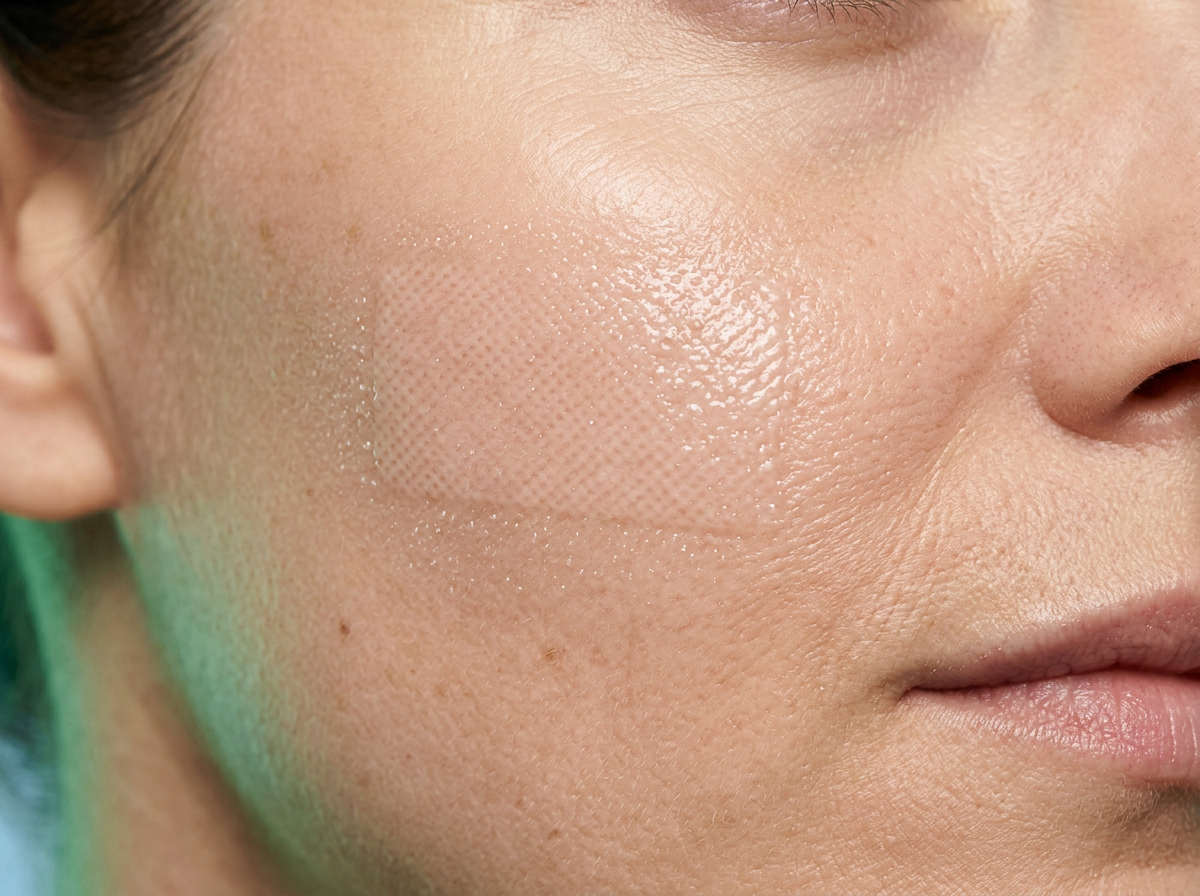
After researching for weeks, my conclusion was this: the device is almost never the differentiator. The serum is. Most kits charge clinic-level prices for a formula that could be sold in a pump bottle for £18. The real test was going to be formula quality and whether the kit could actually deliver it.
How I tested: same face, same conditions, 10 weeks
- 2 full treatment cycles per kit (4 weeks per kit, treatments every 2 weeks)
- Weekly photos: same phone, same window light, same position, same time of day
- Tracked the same area throughout: forehead lines and left jawline
- No other actives (retinoids, acids) during the 10-week test
- I paid for all 5 myself. No free products. No brand relationships.
The 5 kits, in the order I tested them:
- Glov Beauty — the pretty one
- Ctrl+ Skincare — the science-forward PDRN newcomer
- ELIXA Skincare — the salmon DNA / scar-focused kit
- Qure Skincare — the derm-endorsed category leader
- Seranova — the one I dismissed first. The one that won.
What I decided good micro-infusion actually needs to do
Before I started, I wrote down what a kit had to deliver to be worth the money. Six criteria.
- Clinically tested serum formula. Third-party verification, not brand-claimed. You're putting actives into temporary pathways in your skin. Independent certification matters.
- Visible improvement at week 4. Cumulative change to fine lines and firmness by the end of the second session — not just a one-day hydration effect.
- No prolonged reaction. A few hours of mild redness is expected. A 24+ hour reaction, or persistent sensitivity between sessions, fails.
- Consistent session to session. Both sessions must deliver. Inconsistency means it isn't reliable enough for a routine.
- Guarantee long enough to actually evaluate it. Results take 8–12 weeks of consistent use. A 30-day guarantee closes the window before you can fairly judge. I required 90 days or more.
- Still using it after the test ended. The real test.
The comparison table — all 5 kits, all 6 criteria
Legend: ✓ passed · ~ mixed · ✕ failed
| Criterion | Seranova (Winner) | Qure | ELIXA | Ctrl+ | Glov |
|---|---|---|---|---|---|
| Clinically tested serum formula | ✓ | ~ | ✕ | ~ | ✕ |
| Visible improvement at week 4 | ✓ | ✓ | ~ | ~ | ✕ |
| No prolonged reaction (both sessions) | ✓ | ~ | ✓ | ~ | ✓ |
| Consistent session to session | ✓ | ~ | ✕ | ✕ | ✕ |
| 90-day guarantee | ✓ | ✕ | ✓ | ✕ | ✕ |
| Still using after test ended | ✓ | ✕ | ✕ | ✕ | ✕ |
← swipe to compare all brands
🏆 Winner: Seranova Micro Infusion System
See Seranova →The one I use now instead of going back to the clinic
It's been two months since the test ended. The other four kits are in a drawer. Seranova is on my bathroom shelf, used every two weeks.
My forehead lines are measurably better than before the test — more than they were during my regular clinic treatments, at a fraction of the cost. Skin tone is more even. The kind of firmness that used to be a brief post-clinic window has become a consistent baseline.
The honest caveat: results are cumulative, not overnight. What Seranova does is deliver actives to the layer where change can actually happen, consistently, until it compounds into something visible. It did that. The other four didn't.
If I'd found it before those clinic appointments, I'd have saved myself most of that £1,600.
See Seranova at seranovabeauty.com → ★★★★★ · 2,100+ customers · 90-day guarantee · Up to 66% offFAQ
1. Will I see results after the first session?
Hydration yes, structural improvement no. Visible cumulative change comes at 4–6 weeks. If you expect transformation after one use, you'll be disappointed by any kit on the market.
2. Is this painful?
A mild pins-and-needles feeling during application that stops the moment you lift the device. Comparable to in-clinic — possibly slightly less intense because you control the pressure. Patch test first if you're very sensitive.
3. How is this different from a dermaroller or a microneedling pen?
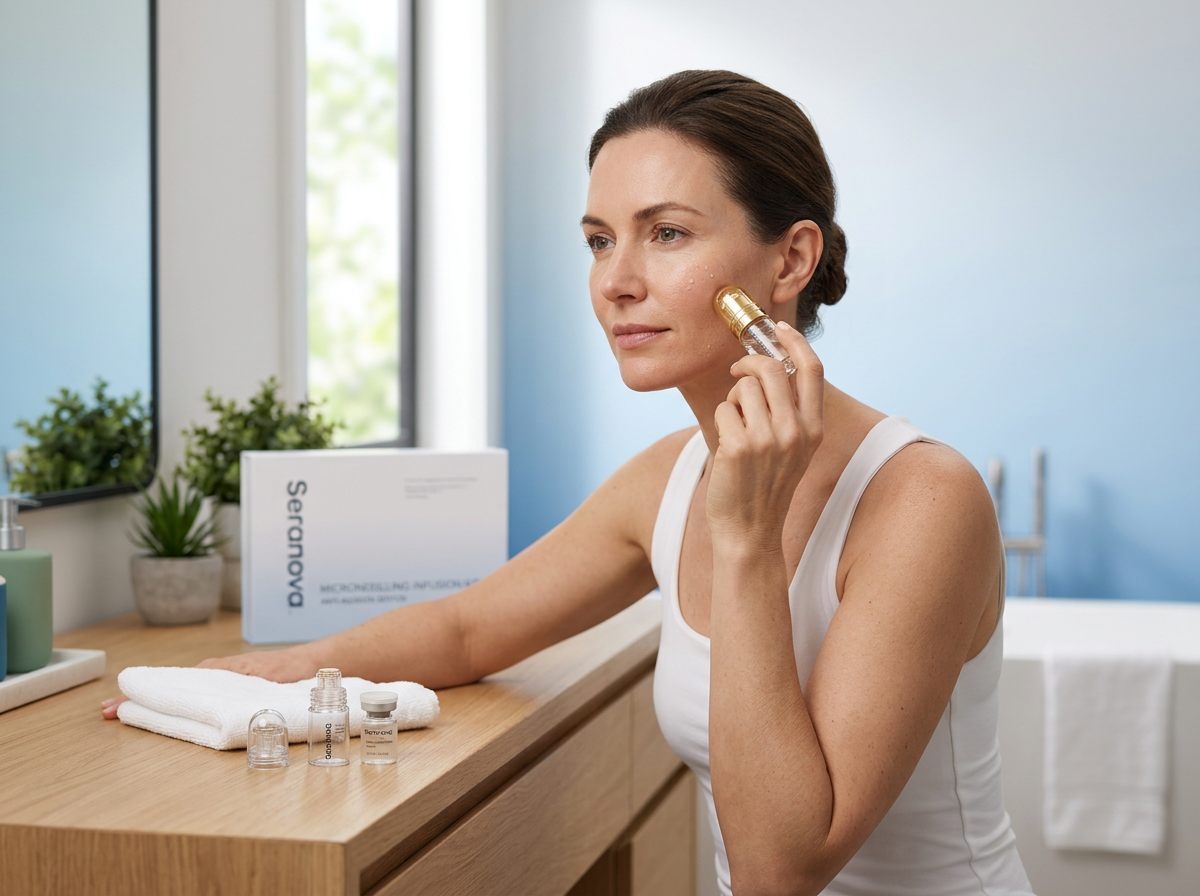
A roller creates pathways by rolling, with no simultaneous serum delivery. Micro-infusion stamps and releases serum as the pathways form — so the actives enter the skin as they're created. Stamping is also more precise and less likely to drag or cause tearing than rolling.
4. Can I use it with retinol, acids, or if I've had Botox or filler?
Retinol and acids: pause 3–5 days before and after. Botox or filler: wait 2 weeks either side. Seranova's serum is fragrance-free and essential-oil-free, designed for post-procedure compatibility. Always check with your practitioner for any active skin condition.
5. Why does the guarantee length matter so much?
Because micro-infusion results take 8–12 weeks. A 30-day guarantee closes before you're even halfway through a proper course — you're being asked to decide if it works before it's had time to work. Seranova's 90-day window is the only honest one in this group.
6. What does Tested by Dermatest™ mean?
Dermatest is an independent German dermatological testing institute that evaluates cosmetic products against clinical standards — ingredient tolerance, claim substantiation, skin compatibility. Third-party, not brand-claimed. In a category where most brands publish their own testing summaries, independent certification is a meaningful distinction.
7. Where should I buy Seranova?
Direct from seranovabeauty.com — that's where the 90-day guarantee applies. The current promotion (up to 66% off) runs while stocks last. Avoid third-party resellers where guarantee terms may not apply.
What customers are saying
"I stopped getting my AquaGold sessions after starting this. Honestly the results are comparable. Skin is noticeably firmer, forehead lines have faded visibly after 3 months."
"Tried Qure first and had a bad reaction. Switched to Seranova and my skin has been happy with it ever since. Four treatments in and my fine lines are genuinely softer. No redness, no drama."
"The 90-day guarantee is what made me try it. By week 6 I knew I wasn't returning it. More even skin tone, fewer lines around my eyes."
Trusted by 2,100+ verified customers worldwide.
See Seranova at seranovabeauty.com →